
Epoxy Flooring in Dubai
Epoxy resin floor systems for garages, warehouses, parking, basements, commercial kitchens, retail back-of-house, balconies. Diamond-grind prep, primer, base coat, anti-slip broadcast where needed, hard-wearing topcoat. Sika, Mapei, BASF, and Henkel systems applied per spec — not "two coats and walk away".
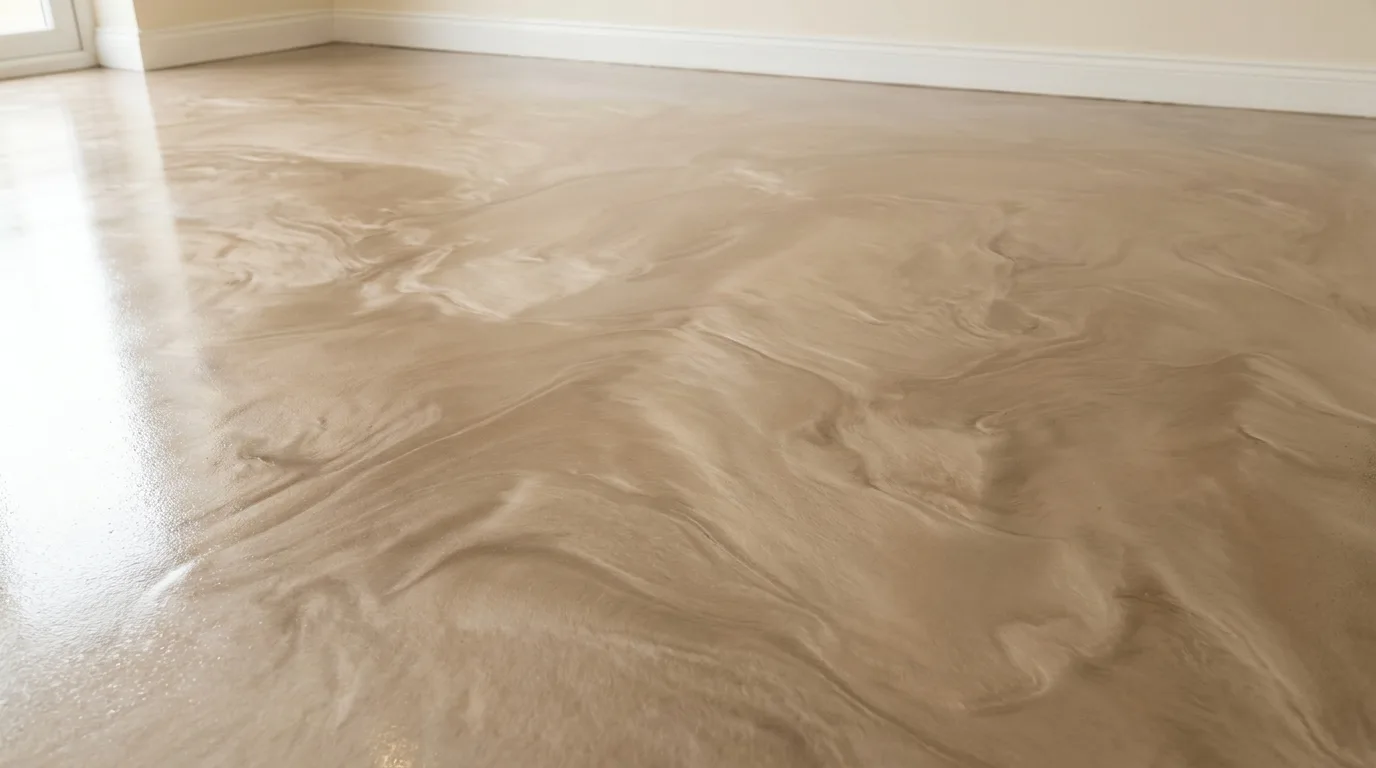
Where epoxy floors actually make sense
Epoxy is not the right answer for every floor. Where it earns its place: high-abrasion environments, hygiene-critical kitchens, vehicle traffic, chemical exposure. Where it doesn't: anywhere with significant moisture rising through the slab, or where the substrate is loose and won't hold prep.
Garage and parking floors
Single-vehicle home garages through to multi-bay basement parking. Self-leveling base with line-marked bays, anti-slip broadcast on ramps, abrasion-resistant topcoat that handles tyre-pull through Dubai summer surface temperatures.
Warehouse and logistics floors
Heavy-duty systems for forklift traffic, racking-load areas, loading docks. Anti-static options for electronics handling, chemical-resistant systems for industrial chemical storage. Joint-cutting and re-pointing where the slab demands it. In a warehouse, walls, roof steel and columns are painted before the floor goes down; see warehouse painting in Dubai.
Commercial kitchens and food prep
Hygienic seamless systems with coved skirting up the wall — no joints for grease and bacteria to hide in. HACCP-compliant material specs available; food-grade safe systems applied with the manufacturer-required primer and topcoat depths.
Retail back-of-house and storerooms
Quick-cure systems for short closure windows. We apply outside trading hours so the unit re-opens the next morning. Light-duty topcoats sufficient for foot traffic and small wheeled trolleys.
Basement and plant-room floors
Where pump leakage, hydraulic oil, or refrigerant spills happen — chemical-resistant epoxy systems plus colour zoning around equipment so leaks are caught fast. Bunded edge details where required.
Balcony and terrace flooring
Waterproof epoxy systems for residential balconies — but only where the slab itself is properly waterproofed first. Epoxy is a wear coat, not a waterproofing layer; we run waterproofing separately if the substrate isn't already protected.
Decorative epoxy (metallic / flake)
Showroom floors, retail front-of-house, residential garages with a high-end finish. Metallic pearlescent base coats, decorative flake broadcasts, high-gloss topcoats. Beautiful when the prep is real; embarrassing when it isn't.
Anti-slip systems
Aggregate broadcast (silica or aluminium oxide) into the base coat for ramps, wet-process areas, walkways. Texture matched to the use — light grit for foot traffic, coarser for vehicle ramps in wet weather.
Line-marking and zoning
Bay markings, walkway lines, hazard zones, directional arrows. Applied as part of the topcoat schedule (between base and topcoat) so the lines are protected by the final wear layer rather than painted on top to scuff off.
Repair and recoat of existing epoxy
Patch repair on damaged areas, full recoat on faded or worn floors. Compatibility-tested with the existing system — incompatible top systems delaminate within months, so we test before recoating an unknown floor.
When epoxy is the right call — and when it isn't
A few honest signals so you can decide whether to ask for a quote or whether you actually need a different solution.
New garage / parking floor
Fresh concrete that needs to handle tyre traffic, oil drips, and Dubai summer slab temperature. Epoxy is the standard answer — system depth matched to the duty (residential vs commercial parking).
Existing kitchen floor with grease build-up
Tile grout joints harbour grease and pass HACCP audits poorly. A seamless coved epoxy system removes the joints entirely. Real fix; pays back in cleaning hours and audit comfort.
Warehouse floor breaking down under forklifts
Concrete dusting, surface spalling, joints opening up. Heavy-duty epoxy with appropriate joint-treatment fixes both. Patch-painting a failing slab buys 6 weeks; a real system buys 8–10 years.
Recurring damp coming through a slab
Stop. Epoxy on a damp slab delaminates within months — sometimes days. Diagnose the moisture source first (rising damp, leaking line, no DPM under the slab). Waterproofing separate from the wear coat.
Old epoxy peeling or chalking
Failure of the original prep or compatibility issue with a recoat. We core-test the existing system, identify the failure mode, and either patch-and-recoat with compatible material or strip and start clean.
Residential interior floor
Almost always not the right answer for living spaces. Epoxy is industrial in origin; residential interiors usually want porcelain, marble, hardwood, or proper resin terrazzo. We'll tell you when it's the wrong tool.
How an epoxy install runs
Six steps. Cure schedule depends on the system and ambient conditions; full traffic-ready typically 5 to 7 days after final coat.
Site visit + substrate assessment
Slab moisture test, surface soundness check (pull-test for adhesion potential), existing-coating identification if recoating, area measurement. Photos and measurements feed into the system spec.
System spec + written quote
System chosen for the duty — light-duty 0.5–1 mm coatings, medium-duty 2–3 mm self-levelling, heavy-duty 4–6 mm for industrial. Brand and product line confirmed. Written line-item quote covering prep, primer, base, topcoat, line-marking if applicable.
Diamond-grind surface prep
The step that decides whether the floor lasts 8 years or 18 months. Diamond grinder removes laitance, opens the slab pores, and gives a CSP profile suited to the chosen system. Dust-extracted to keep the area workable.
Primer + base coat
Penetrating primer to bond into the open slab, allowed to cure to the manufacturer's open-time window, then the base coat applied wet-on-tacky for chemical bond rather than mechanical-only. Self-levelling systems screeded to depth.
Broadcast + topcoat
For anti-slip or decorative finishes, aggregate or flake broadcast into the wet base coat at the manufacturer-specified loading. Cured, swept clean of unbonded material, then sealed with the topcoat at the spec mil-thickness.
Cure + handover
Foot-traffic cure typically 24 hours; light-traffic 48–72 hours; full-load traffic 5–7 days depending on system. Handover photos and a system data-sheet pack — you keep the spec for future maintenance and any compatibility-recoat decisions.
How epoxy flooring is priced
Quoted per square metre, with separate line items for prep, system, finish layers, and line-marking. No surprise add-ons mid-project.
Per-square-metre rate by system
Light-duty floor coatings (warehouse light traffic, retail back-of-house) are cheaper per m² than self-leveling 2–3 mm systems, which are in turn cheaper than 4–6 mm heavy-duty industrial. Quoted by system, not by guess. Lower price points without the right prep are a sign the prep step is being skipped.
What changes the price
- System depth and duty class
- Substrate condition — sound slab vs failing slab needing repair
- Prep method — diamond grind, shot-blast, scarification
- Decorative finishes — metallic, flake broadcast, line-marking
- Joint detailing and coved skirting
- Out-of-hours application for occupied premises
How to get a quote
WhatsApp area in m² (approximate is fine), use case (garage / warehouse / kitchen / etc), and photos of the existing slab. Most quotes return within the same working day; site visit booked for anything above ~100 m² before final pricing.
Workmanship and material warranties
Two layers on every epoxy install. Workmanship is ours; material warranties on the system pass through directly from the manufacturer — and depend on the system being applied per spec, which is why we don't cut corners on prep or coat thickness.
Workmanship warranty
6-month workmanship warranty — if the same issue returns within 6 months due to our work, we'll fix it free of charge. Covers labour only.
For epoxy specifically: delamination from prep failure, pinholes from incorrect roll technique, miscured patches from bad mix ratios — all covered if the cause traces to our application. Damage from misuse, water rising through the slab, or chemical attack outside the system's rated resistance is not covered (and is rarely a real warranty case anyway).
Material warranties
Material warranties depend on the system installed. The brands we work with — including Sika, Mapei, BASF, Fosroc, Henkel, and others — carry manufacturer warranties from 5 to 15 years on commercial-grade industrial systems, conditional on the system being applied per the manufacturer's data sheet. We document the spec, prep, and coat thicknesses on every install so the warranty is real, not theoretical.
Frequently asked questions
What warranty do you provide?
We offer two layers of warranty. First, a 6-month workmanship warranty on the labour we perform — if the same issue returns within 6 months due to our work, we re-do it at no cost. Ask for the warranty terms that apply to the quoted work. If materials or replacement parts are included, ask which manufacturer warranty applies.
Does the workmanship warranty cover parts and equipment?
No. Parts, fixtures, and equipment are covered by their manufacturer warranties, which we pass through to you directly. The workmanship warranty covers only the quality of the installation or repair work itself.
How long until the floor can take traffic?
Light foot traffic typically 24 hours after the final coat. Light wheeled traffic 48–72 hours. Full vehicle / forklift traffic 5–7 days. Cure times depend on the system and ambient temperature — Dubai summer slabs cure faster than winter slabs. We share the cure schedule in writing on handover.
Can you apply epoxy without closing my warehouse / shop?
For occupied commercial premises we phase the area — half the floor at a time — or schedule out-of-hours application across multiple nights. Closure of at least 24 hours per zone is needed for cure; total project window is longer than a single shutdown but trading continues. We plan the schedule with you up front.
Why does prep matter so much?
Because most epoxy failures in Dubai trace to prep, not material. A diamond-grind opens the slab pores; a quick acid-etch or "clean and apply" leaves the surface laitance in place, and the coating adheres to that — so it peels off with the laitance after 12–18 months. Real prep is the difference between an 8-year floor and a 1-year floor.
My slab gets damp — can you still apply epoxy?
Honestly — no, not directly. Standard epoxy applied to a damp slab delaminates because vapour pressure pushes through the coating. Solutions: diagnose and stop the moisture source first, or use a moisture-tolerant primer / vapour-barrier system specifically rated for damp substrates (Sika and Mapei both produce these). We test moisture content with a calibrated meter before quoting, never assume.
Can you do decorative metallic / flake finishes?
Yes — for showroom floors, residential garages with a high-end finish, retail front-of-house. Metallic pearlescent systems and decorative flake broadcasts both require the same disciplined prep as industrial systems; the visual finish only looks right when the substrate is right. We share sample boards before approval so the colour, depth, and texture match what you imagine.
Areas we cover
Same-day reach across Dubai. Tap your area for landmarks, communities and the services we deliver there — or tell us your building on WhatsApp.
Quote your epoxy floor
WhatsApp the area, use case, and a photo of the slab. Most quotes confirm within the same working day; site visit booked for anything above 100 m² before final pricing.
