AC Major Overhaul in Dubai: Compressor, PCB, Fan Motor & Thermostat Replacement
Part-level work on air conditioning units in Dubai — compressor replacement, PCB and control-board faults, condenser and blower fan motors, and thermostat and sensor failures. We diagnose the unit first and replace the component that has actually failed. Every job carries our 6-month workmanship warranty.
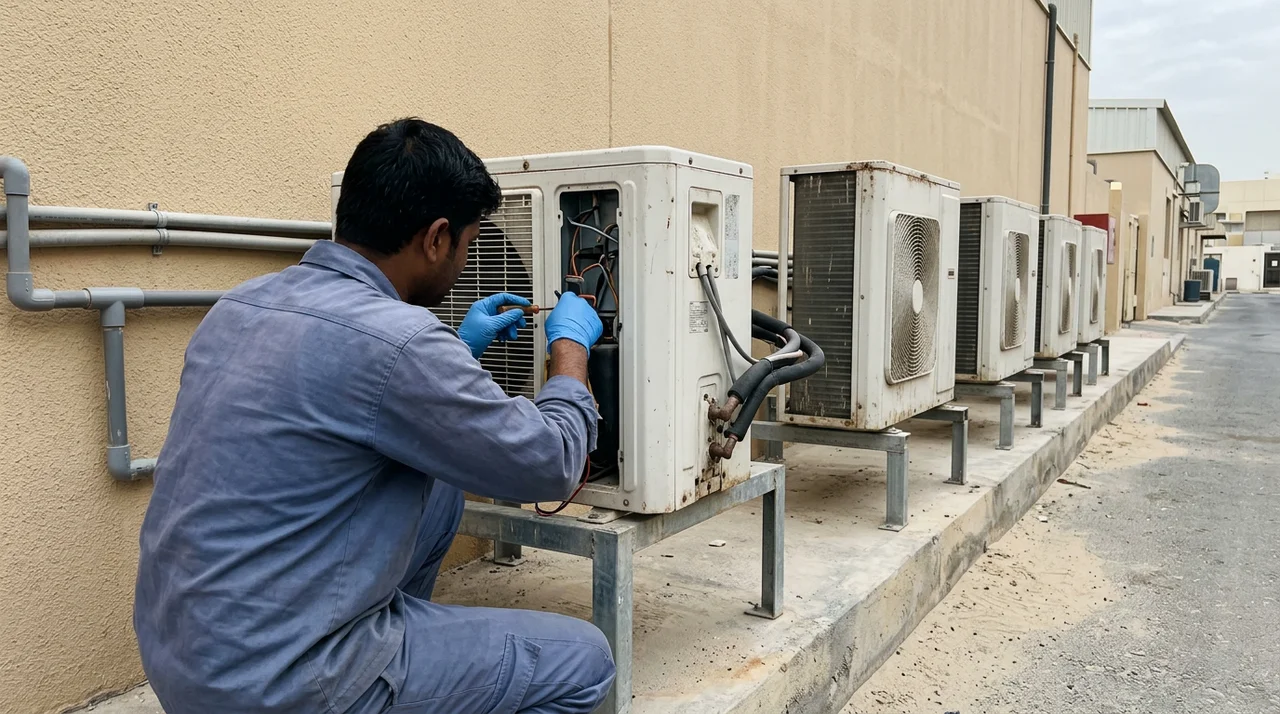
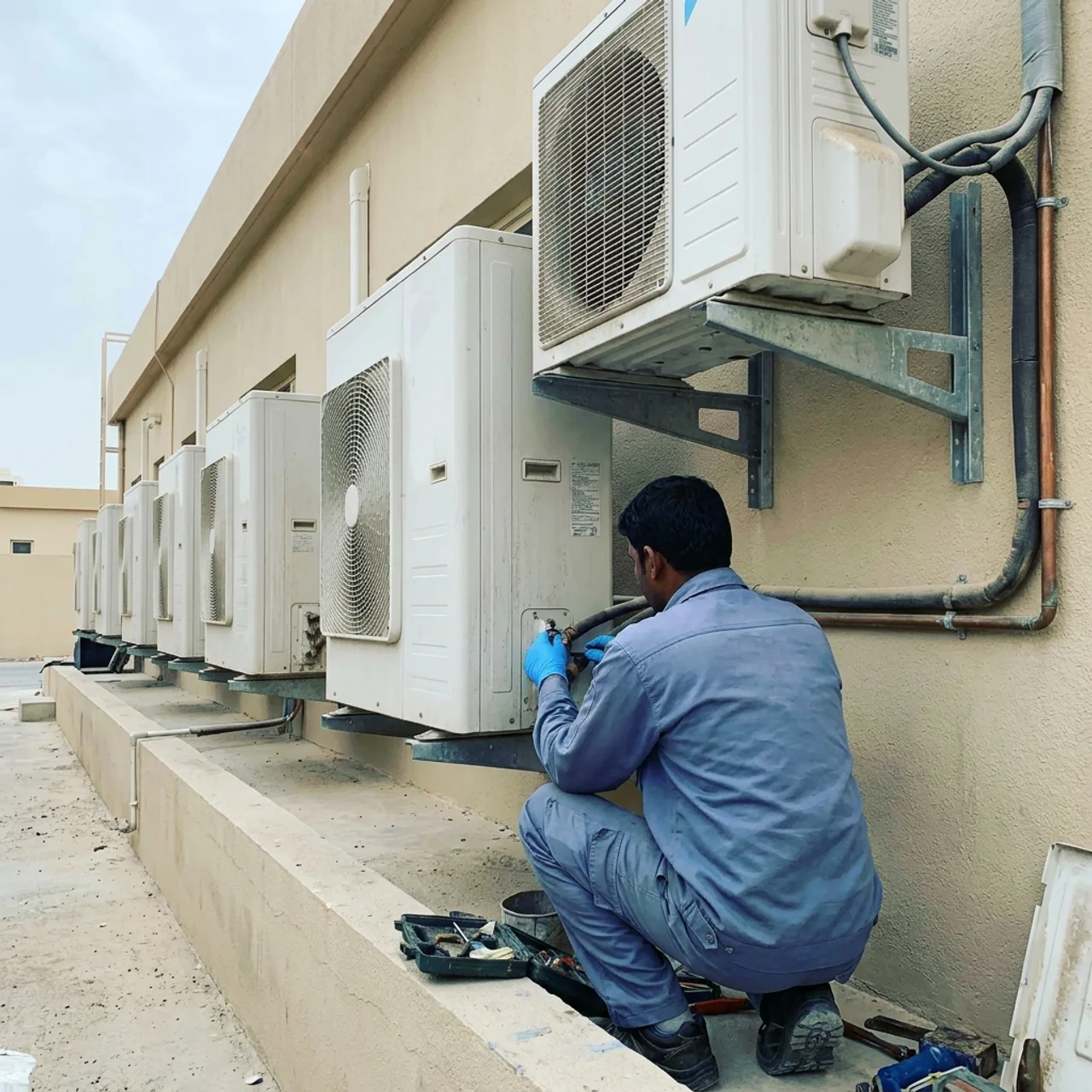
Recent AC overhaul jobs
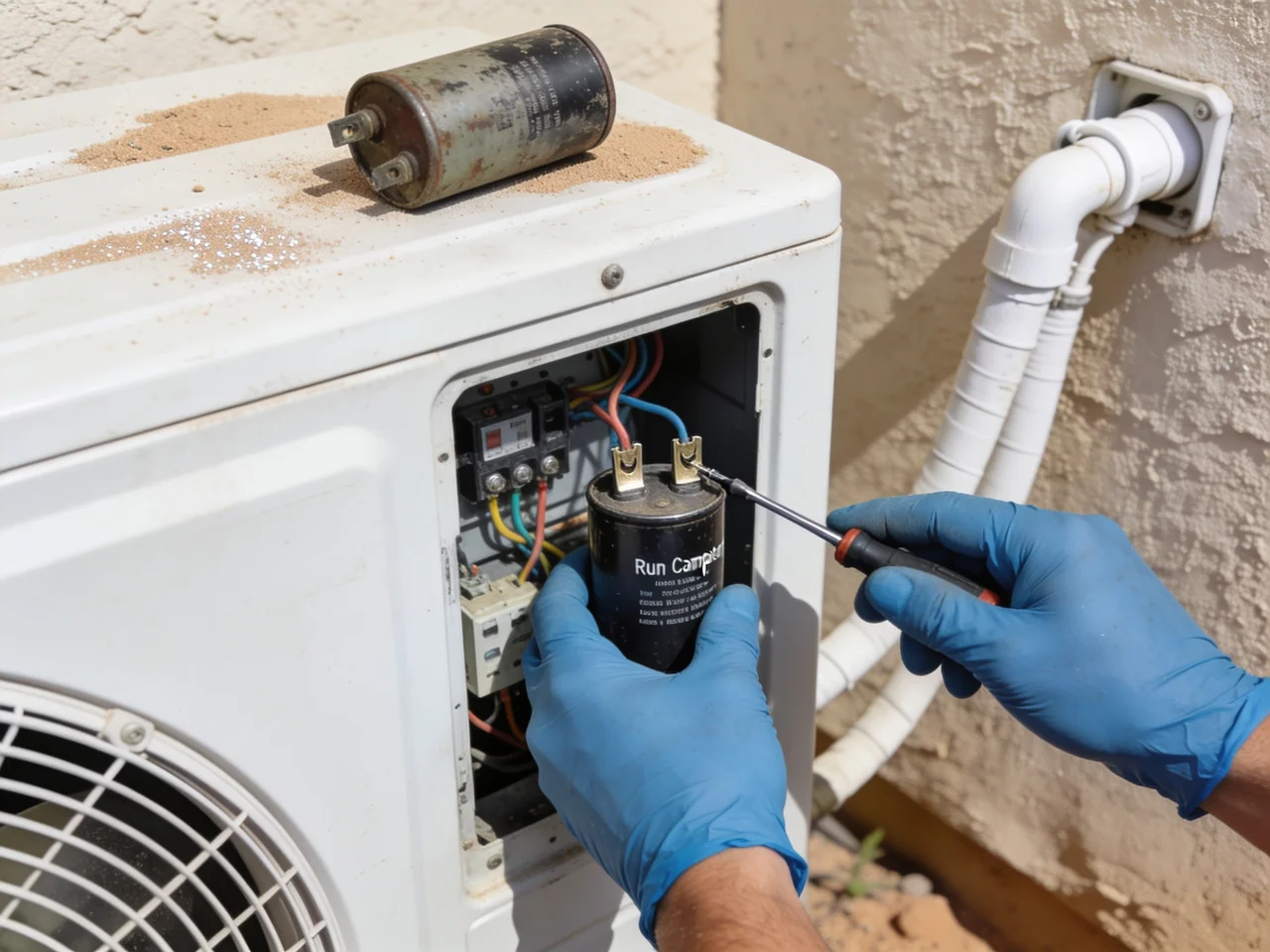
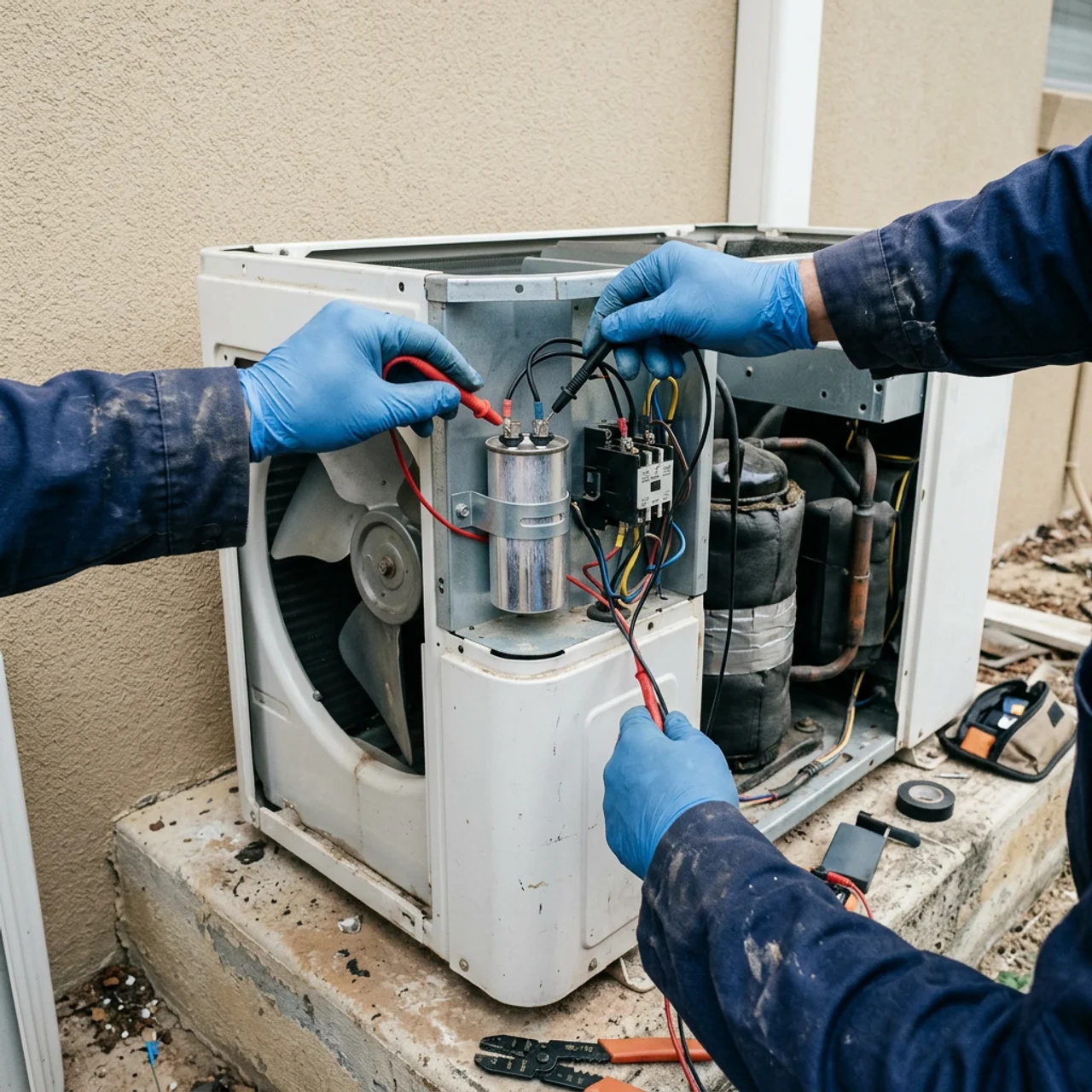
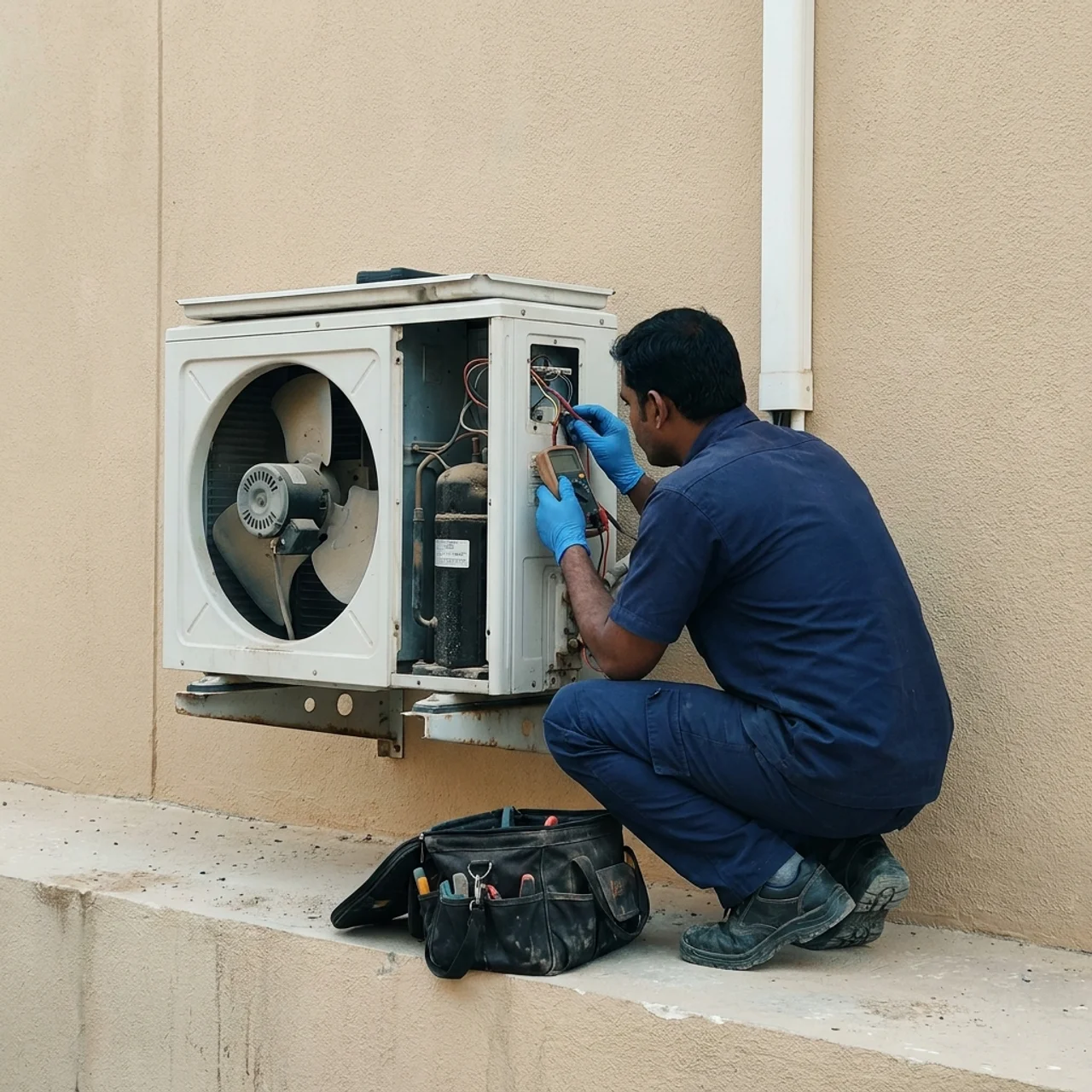
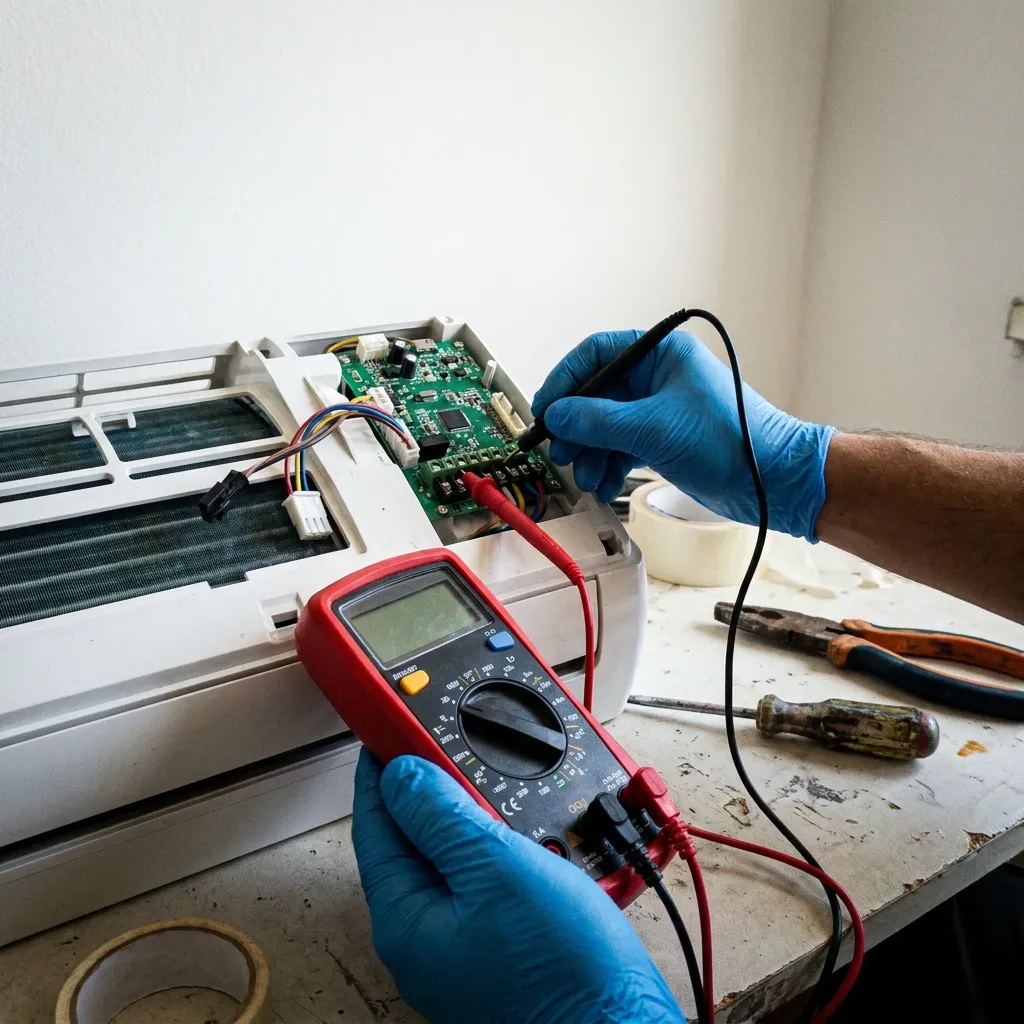
Real Samra major AC replacements across Dubai — compressor and PCB work, fan-motor swaps, capacitor changes, and full outdoor-unit replacements.
What an AC major overhaul covers
A major overhaul is what happens when a unit is past the point a routine service or a single repair visit can fix. The refrigeration circuit, the electrics or the air side has a failed component in it, and the unit needs that component replaced and the system brought back to working condition around it. That is different work from servicing, and it is priced, planned and warranted differently.
The big four are compressors, PCB and control boards, fan motors, and thermostats and their sensors. Each is covered in detail below. A full strip-down overhaul — where a unit is opened, cleaned internally, its failed parts replaced and its charge and controls reset together — is the same work bundled into one visit, usually on an older ducted or central system that has been limping for a season.
If your AC has stopped cooling, is leaking water or has tripped and you do not yet know why, start with a diagnosis rather than a part. That is a repair call, and it belongs on our AC repair in Dubai page. This page is for what happens after the fault has been identified and a component has to come out.
Compressor replacement
A compressor replacement is major work on a split or ducted system, and the compressor is also a part that is often condemned when something smaller was at fault. A unit that runs but does not cool can be low on refrigerant, blocked on the condenser side, or losing capacity through a failed capacitor or contactor long before the compressor itself is dead.
We confirm a compressor failure before quoting one: electrical checks across the windings, a check for a locked rotor or a failed start component, and suction and discharge pressure readings taken with the system running. If the compressor has genuinely failed, we replace it with a unit matched to the system's tonnage and refrigerant type, replace the filter drier, vacuum the circuit and recharge to the manufacturer's stated weight rather than by gauge feel. We also look for what killed it — a restricted condenser, a persistent leak, low airflow or repeated short-cycling — because a new compressor fitted into the same conditions has the same future.
PCB and control board repair or replacement
The PCB is the control board that reads the sensors, drives the fan and compressor relays, and talks to the remote or wall controller. When it fails you get symptoms that look like several different faults at once: the unit will not start, it starts and stops on its own, the display flashes an error code, the fan runs but the compressor never engages, or the remote no longer changes anything.
We read the error code where the unit provides one, then verify at the board itself — supply voltage in, switched output to the fan and compressor circuits, sensor resistance values, and visible damage such as burnt tracks, swollen capacitors or corrosion from moisture. Some board faults are repairable at component level; many are not, and on inverter units the board is usually replaced as an assembly matched to the model. Dubai's dust, humidity and voltage conditions are hard on control electronics, which is why a board fault deserves a careful diagnosis rather than a guess — or a whole new unit.
Fan motor and blower replacement
Two motors matter on a typical split or ducted system: the condenser fan outside, which rejects heat, and the indoor blower or FCU fan, which moves air through the coil and into the room or duct. When the condenser fan motor fails or slows, head pressure climbs, cooling collapses and the compressor is put under load it was never designed to carry. When the indoor blower weakens, airflow drops, the coil ices and the room stays warm even though the unit sounds like it is working.
We test the motor and its capacitor separately before condemning either — a failed run capacitor produces motor symptoms at a fraction of the cost of a motor. Where the motor is genuinely at fault we replace it with a matched-rating unit, check bearing and blade condition, rebalance the blower wheel where it applies, and confirm the corrected airflow and pressures before closing up. Grinding, screeching, rattling or a unit that only starts if you nudge the blade are all fan-side symptoms worth having looked at before the season peaks.
Thermostat, sensor and control faults
A thermostat fault is the simplest failure on this page to put right, and the one often misdiagnosed as something far more serious. If the room temperature sensor drifts, the unit either never reaches setpoint and runs continuously, or satisfies far too early and short-cycles. If the coil sensor fails, the unit can freeze or lock out on a protection code. If the wall controller or its wiring is at fault, the system may ignore commands entirely.
We check the sensor resistance against the manufacturer's temperature curve, verify the control wiring end to end, and confirm the thermostat is switching the circuit it is supposed to switch before replacing anything. On ducted and central systems we also check that the thermostat is sensing a representative part of the space — a controller mounted in a return-air draught or in direct sun will misreport the room no matter how healthy the hardware is.
How we diagnose before we replace anything
Part-level work only makes sense if the part is the problem. Our overhaul visits follow the same order every time.
First, the symptom and the history: what the unit is doing, when it started, what has been done to it before, and whether it has been serviced. Second, the electrical side: supply, capacitors, contactors, relays and board outputs, because electrical failures imitate mechanical ones and cost a fraction as much to fix. Third, the air side: filters, coil condition and airflow, because many "weak cooling" complaints on units in Dubai turn out to be airflow complaints. Fourth, the refrigeration side: pressures, superheat and subcooling, and a leak check where the charge is short. Only then do we name a component.
What you get at the end of that is a plain description of which part has failed, what replacing it involves, and what else on the unit is close enough to failure to be worth doing in the same visit rather than in a second call-out.
Signs your AC needs part-level work, not another service
Servicing is preventive: clean the coil, clear the drain, check the charge, keep the unit healthy. Once a component has failed, more servicing will not bring the cooling back. These are the patterns that usually mean a part, not a service.
The unit trips the breaker when it starts, or hums and does not start at all. The outdoor unit runs but the air off the indoor grille is barely cool. The unit cools well for twenty minutes then stops and restarts repeatedly. The display shows a persistent error code that returns after every reset. The system was recharged with refrigerant recently and is already weak again. There is a loud grinding, screeching or knocking noise from either unit. The remote or wall controller no longer changes the unit's behaviour. Or the unit is old enough that several of these are happening at once — that is the case for a full overhaul rather than a single part.
If what you are seeing instead is water dripping from the indoor unit, a sudden total loss of cooling or a unit that has just stopped in the middle of summer, that is a breakdown call: see AC repair for same-fault attendance, or AC service in Dubai if the unit is simply overdue for maintenance.
Overhaul or replace? How we decide
There is a point where putting a compressor into an old unit is worse value than putting a new unit on the wall, and we would rather tell you that at the diagnosis than after the invoice.
We weigh four things: the age and remaining service life of the unit, how many major components have already failed or are close to it, whether the failure is a one-off or the result of a condition that will repeat, and whether the existing system is correctly sized for the space it serves. A five-year-old inverter split with one failed fan motor is worth repairing. A twelve-year-old unit on its second compressor, running on an obsolete refrigerant, with a corroded coil, is a replacement conversation — and we will say so.
When replacement is the honest answer, the work moves to new AC installation in Dubai, where the old unit is removed and the new one supplied, installed and commissioned. Where a system is large or multi-zone, VRF and VRV systems covers how those installations differ. Background reading on when units in this climate typically reach the end of their life is in our guide to the real lifespan of an AC unit in Dubai's climate.
Brands and system types we overhaul
We carry out compressor, PCB, fan motor and thermostat work on Daikin, LG, Mitsubishi, O General, Gree and Carrier equipment.
By system type that covers wall-mounted splits, ducted and concealed units, cassettes, package units, and fan coil units on central systems. Inverter and non-inverter units are both handled, though they differ in practice: inverter systems put more of the fault load onto the control board and the drive, non-inverter systems onto the compressor's start components and contactors. If your unit is a brand not listed here, send us the model number from the indoor unit label on WhatsApp and we will tell you honestly whether the part can be sourced before you book a visit. Where a unit is part of a building's central plant rather than a standalone system, the work sits with chiller maintenance or commercial HVAC instead.
Warranty on overhaul work
Every job we complete carries a 6-month workmanship warranty. That covers the work we performed — the fitting, the connections, the charge and the commissioning of the component we replaced.
Manufacturer warranty on the part itself is separate and is set by whoever made it; we confirm the specific cover on your part in writing when the part is specified, rather than quoting a general figure here. If a unit we have overhauled develops a fault in an area we worked on within the warranty period, come back to us and we attend it.
Frequently asked questions
How do I know whether my AC compressor has actually failed?
You usually cannot tell from the symptoms alone, which is why compressors are so often replaced when a smaller component was at fault. A unit that runs without cooling can be low on refrigerant, blocked on the condenser side, or held back by a failed capacitor or contactor. A genuine compressor failure is confirmed with electrical checks across the windings, a check for a locked rotor or failed start component, and suction and discharge pressure readings taken with the system running. We do those checks before we quote a compressor.
What is a PCB in an air conditioner, and can it be repaired instead of replaced?
The PCB is the control board that reads the unit's sensors and switches the fan and compressor circuits. Some faults are repairable at component level — a failed relay, a swollen capacitor, a corroded track. Many are not, and on inverter units the board is generally replaced as a matched assembly for the model. We check supply voltage in, switched outputs, sensor values and visible board damage before deciding, and we tell you which of the two your board is.
My AC is noisy and not cooling well. Is that the compressor or the fan?
Grinding, screeching, rattling or a unit that only starts when the blade is nudged points to the fan side — motor bearings, the blade or blower wheel, or the run capacitor. Weak cooling with a normal-sounding unit points more often to airflow, coil condition or refrigerant charge. Both are checked in the same diagnosis, and the fan capacitor is tested separately from the motor because a failed capacitor produces motor symptoms at a fraction of the cost.
My AC still cools but the electricity bill has jumped. Is that a compressor problem?
It can be, but a rising bill on a unit that is still cooling more often points to dirty coils, weak airflow, a failing fan motor or a short refrigerant charge making the system work harder than it should. Diagnose it before assuming the worst case — our guide to diagnosing high AC electricity use walks through what to check.
Is a major overhaul worth it, or should I just replace the unit?
It depends on the unit's age and remaining life, how many major components have already failed, whether the failure will repeat because of an underlying condition, and whether the system is correctly sized for the space. One failed component on a relatively young unit is normally worth repairing. Several major failures on an old unit, especially with a corroded coil or an obsolete refrigerant, is a replacement conversation — and we will say so at the diagnosis rather than after the work.
Do you work on my brand of AC?
We carry out compressor, PCB, fan motor and thermostat work on Daikin, LG, Mitsubishi, O General, Gree and Carrier equipment, across wall-mounted splits, ducted and concealed units, cassettes, package units and fan coil units on central systems. For any other brand, send the model number from the indoor unit label on WhatsApp and we will confirm whether the part can be sourced before you book a visit.
What warranty do I get on overhaul work?
Every job carries our 6-month workmanship warranty, which covers the work we performed — fitting, connections, charge and commissioning of the replaced component. Warranty on the part itself comes from its manufacturer and is confirmed to you in writing when the part is specified.
How quickly can you attend?
For emergency call-outs we aim to dispatch within 2 to 4 hours wherever possible for standard customers, and within 1 to 3 hours for customers on an annual maintenance contract. Overhaul work itself is normally scheduled once the failed part is confirmed and available, and building access windows in apartment towers can affect the timing.
Areas we cover
Same-day reach across Dubai. Tap your area for landmarks, communities and the services we deliver there — or tell us your building on WhatsApp.
Book a compressor, PCB or fan motor diagnosis
Send us the unit's brand, its approximate age, the error code on the display if there is one, and what the unit is actually doing — that is usually enough for us to tell you what class of fault we expect before anyone travels. We take this work across Dubai.